
A Designer’s Guide to Keeping Your Home Cool With Luxury Interior Design
Keeping a house cool in summer is no longer a seasonal concern but an essential part of how modern homes are designed and experienced. As UK temperatures rise and architectural trends favour open-plan living and expansive glazing, maintaining a comfortable internal environment requires more than reactive solutions.
Luxury interior design approaches this challenge differently. Rather than relying on temporary fixes, it focuses on how materials, layout, light, and airflow work together to create a naturally cooler home. The result is not only improved comfort during warmer months, but a more considered, refined living environment throughout the year.
This guide to keeping your home cool explores design-led strategies that are both practical and enduring.

A Design-Led Answer To Summer Heat
The most effective way to reduce heat in a home is to prevent it from building up in the first place.
In well-designed interiors, cooling is achieved through a combination of:
Materials that naturally regulate temperature
Controlled interaction with sunlight
Balanced airflow across the property
Carefully specified fabrics and finishes
Subtle integration of mechanical systems where appropriate
This layered approach is what defines luxury home cooling solutions. It is not about one single intervention, but the way each element supports the overall environment.
Why High-End Homes Require A Different Approach
Larger properties and design-led homes often present unique challenges when it comes to temperature control.
Features such as:
Double-height spaces
Floor-to-ceiling glazing
Open-plan living areas
South-facing orientations
can all contribute to heat retention if not carefully managed.
In areas such as Cheshire, where contemporary new builds and extended period homes are increasingly common, these architectural features are highly desirable but require a more considered interior strategy to ensure comfort is maintained.
The Quiet Influence Of Materials On Temperature
Material selection is one of the most overlooked yet impactful aspects of keeping a house cool.
-
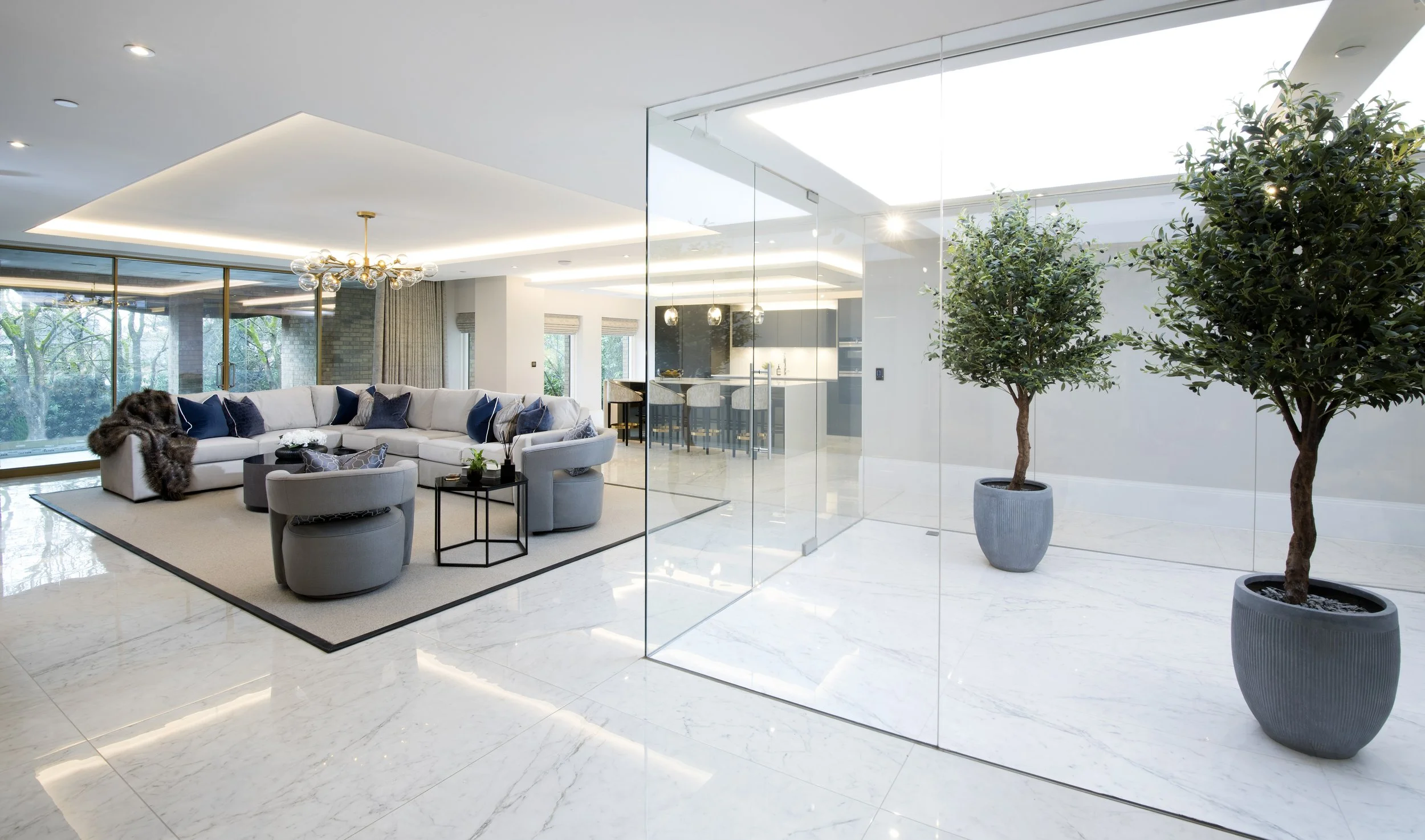
Marble and natural stone are widely used in luxury interiors for their visual clarity and longevity, but their thermal properties are equally valuable.
These materials:
Remain naturally cool even during prolonged heat
Help regulate temperature across large spaces
Provide a consistent surface that reduces heat retention
In expansive homes, particularly those with open-plan layouts, marble flooring can subtly stabilise the internal environment while enhancing the overall aesthetic.
-
Soft materials such as thick carpets tend to trap warmth, whereas harder surfaces allow heat to dissipate more efficiently.
Porcelain, limestone, and engineered stone all offer:
Improved thermal performance
Longevity in high-traffic areas
A cleaner, more breathable interior environment
This is especially relevant in kitchens, hallways, and living spaces where heat accumulation is more noticeable.
-
Beyond texture, colour plays a quiet but important role.
Lighter finishes reflect sunlight rather than absorbing it, helping to:
Maintain lower surface temperatures
Brighten spaces without increasing heat
Create a more balanced atmosphere throughout the home
When applied consistently, this can influence the overall feel of a property during warmer months.

Fabrics That Breathe & Regulate
Textiles define comfort just as much as structure.
-
The best fabrics for hot weather interiors are those that allow air to move freely.
Natural fibres such as linen and cotton:
Improve airflow around seating and sleeping areas
Prevent heat from becoming trapped within soft furnishings
Introduce a lighter, more relaxed aesthetic suited to summer
These materials are often used across upholstery, bedding, and soft furnishings to create a cohesive, breathable interior.
-
Curtains are often seen as decorative, but in reality they are one of the most effective tools for managing internal temperature.
Thermal and solar-control curtains can:
Reduce solar gain during peak daylight hours
Protect interiors from overheating
Maintain privacy without sacrificing comfort
In larger homes with extensive glazing, this becomes a critical part of the overall design strategy.
-
Combining sheer fabrics, blinds, and heavier drapery allows for more precise control.
This layered approach enables:
Gradual filtering of light throughout the day
Adaptability as temperatures change
A balance between openness and insulation
It is a subtle but highly effective way to manage both light and heat.
The Role Of Layout & Spatial Planning
How a home is arranged can influence temperature just as much as what it is made from.
Airflow, in particular, is often overlooked.
Well-considered layouts allow for:
Natural cross-ventilation between rooms
Reduced heat build-up in enclosed areas
Better circulation of cooler air throughout the property
In larger homes, zoning can also play a role, allowing different areas to respond differently to temperature changes rather than relying on a single solution.
This is where interior architectural design becomes essential, ensuring the home performs as well as it looks.
Managing Sunlight Without Losing It
Natural light is one of the defining features of luxury homes, but it must be carefully controlled.
Excessive solar gain can quickly raise internal temperatures, particularly in south-facing spaces.
Refined solutions include:
Solar-control glazing that limits heat penetration
External shading that reduces direct exposure
Interior treatments that soften and diffuse light
The goal is not to block light entirely, but to refine how it enters the space.

Cooling Without Over-Reliance On Air Conditioning
Air conditioning is often viewed as the default solution, but in well-designed homes it plays a supporting role rather than a primary one.
When combined with passive design strategies:
Systems can be used more efficiently
Energy consumption is reduced
The overall environment feels more balanced and less mechanical
This approach is increasingly relevant as sustainability becomes a central consideration in high-end residential design.
Designing For Longevity & Seasonal Comfort
Short-term solutions can offer immediate relief, but they rarely address the underlying causes of overheating.
True comfort comes from decisions made at a deeper level:
The structure and layout of the home
The materials selected across floors, walls, and furnishings
The way light and air move through the space
For homeowners undertaking renovations or new builds, these considerations are most effective when integrated early in the design process.

When Professional Design Input Adds Value
For complex homes, large properties, or design-led projects, cooling strategies benefit from a coordinated approach.
Working with an interior design team allows for:
Alignment between architecture, materials, and furnishings
A cohesive strategy across the entire property
Integration of FF&E with performance in mind
Reduced reliance on reactive or temporary solutions
You can explore how these principles are applied across completed homes here.
And learn more about the broader design process here.
FAQs
-
The most effective approach combines material choice, airflow, and light control to reduce heat build-up naturally.
-
Yes, marble remains naturally cool and helps regulate temperature across larger spaces.
-
Linen, cotton, and other natural fibres are ideal as they allow airflow and reduce heat retention.
-
Yes, well-planned interiors can significantly reduce reliance on mechanical cooling by improving passive performance.
-
Large glazing areas and open-plan layouts can increase heat retention if not carefully managed through design.
A More Considered Approach To Summer Living
Keeping a house cool in summer is ultimately about balance. The most comfortable homes are not those that rely on a single solution, but those where every element has been considered in relation to the whole.
From the quiet cooling effect of stone flooring to the way light is filtered through carefully selected fabrics, these details combine to create an environment that feels composed, liveable, and consistent.
For those planning a renovation or new build, incorporating these principles early can make a lasting difference not only to comfort, but to the overall quality of the home.
Get in touch with our team of designers to see how we can help keep your house cool this summer.